|
Bullah still rekindles hope for peace from grave
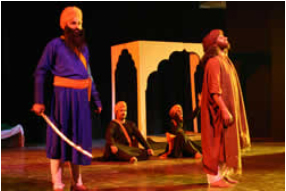
* Lack of seating inconveniences audience who came to watch Ajoka’s traditional performance
By Mahtab Bashir
ISLAMABAD: Free public entry to National Art Gallery (NAG) created a mess on Sunday, when over 600 people came to watch Ajoka Theatre’s popular Punjabi stage play ‘Bullah’ while the auditorium has seating arrangements for 412 viewers.
The story revolves around efforts of 18th century Sufi poet Bulleh Shah to advocate religious and social harmony among people.
With his powerful voice, Bulleh Shah called for tolerance and love in times when the sub-continent was engulfed in war, hopelessness and hatred. His voice still remains relevant, as people strive for peace amidst endless violence confronting the world today.
Performed in 2001 for the first time by Ajoka Theatre, the play ‘Bullah’ is a tribute to the great mystic. It is broadly based on events of his life, as communicated through his poetry, historical records and popular myths.
There is no dearth of dramatic episodes in the life of Bullah. His search for truth, his devotion to his mentor Shah Inayat, his opposition to the wars and bloodshed in the name of religion are incorporated as powerful scenes in the play. It is a strong plea for love and peace, and an indictment against intolerance, violence and hatred.
The drama begins with a scene at the funeral of Bulleh Shah. Rulers and clerics in his city of Kasur refused to offer funeral services for the mystic because they accused him of being non-Muslim and anti-Muslim. Bulleh Shah lived at a time when Mughal Empire was facing downfall.
Written by Shahid Nadeem and directed by Madeeha Gauhar, the play has earned great appreciation and applause.
It beautifully presents social evils and problems within sub-continental cultures, particularly tensions between Islam, Hinduism and Sikhism. The cast and crew very clearly exposed negative thinking of clerics, qazis and rulers. They exposed violence of Mughal, Sikh and Afghan attacks on Punjab.
Because of mismanagement by organisers of the programme, majority of people could not view the play and a few youngsters broke doors and windows in fury.
Today (Tuesday), a play titled ‘Raees Khana’ scripted by William Pervaiz and produced by Pattan Lok Natak, Islamabad, will be staged.
Daily Times:Tuesday,July 14, 2009
Refurbishment of Bulleh Shah shrine completed
By: Rana Latif
LAHORE - The reconstruction and renovation work of the shrine of Hazrat Baba Bulleh Shah in District Kasur has been completed by the Auqaf Department.
Built in three phases at a cost of approximately Rs 60 million, half of which granted by the Punjab government, the new shrine complex is a rich addition to the grandeur of shrine architectures in the province. It comprises the main shrine and its tomb, attached mosque and its 102 feet high minarets, a library, arcade, two-way entrance to the shrine, landscaping and an administrative block.
Director Projects Auqaf Punjab Mohammad Shabbir Malik, who has attained expertise in the preservation and renovation of ancient shrines and their architectural designs, supervised the refurbishment work.
The shrine looks one of the finest shrine complexes of the area, and a valuable engineering feat of preservation work, modernised with improved standard and capable of giving religious services and public amenities to devotees.
The elegant shrine looks majestic and when illuminated during ceremonies add to the beauty of the City. This also speaks of better management of Waqf properties for which the Auqaf was established in 1960. The mosque and the shrine also serve as model institution of mystical teachings and poetry of Bulleh Shah. It also reflects the pristine glory of monuments.
The revolutionary poetry of Baba Bulleh Shah would always keep him alive. The legendary saint through his poetry imparted moral and social values to the generations. Paradoxes and contradiction were the main features of his poetry.
The Nation: July 14, 2009
|
